The challenge
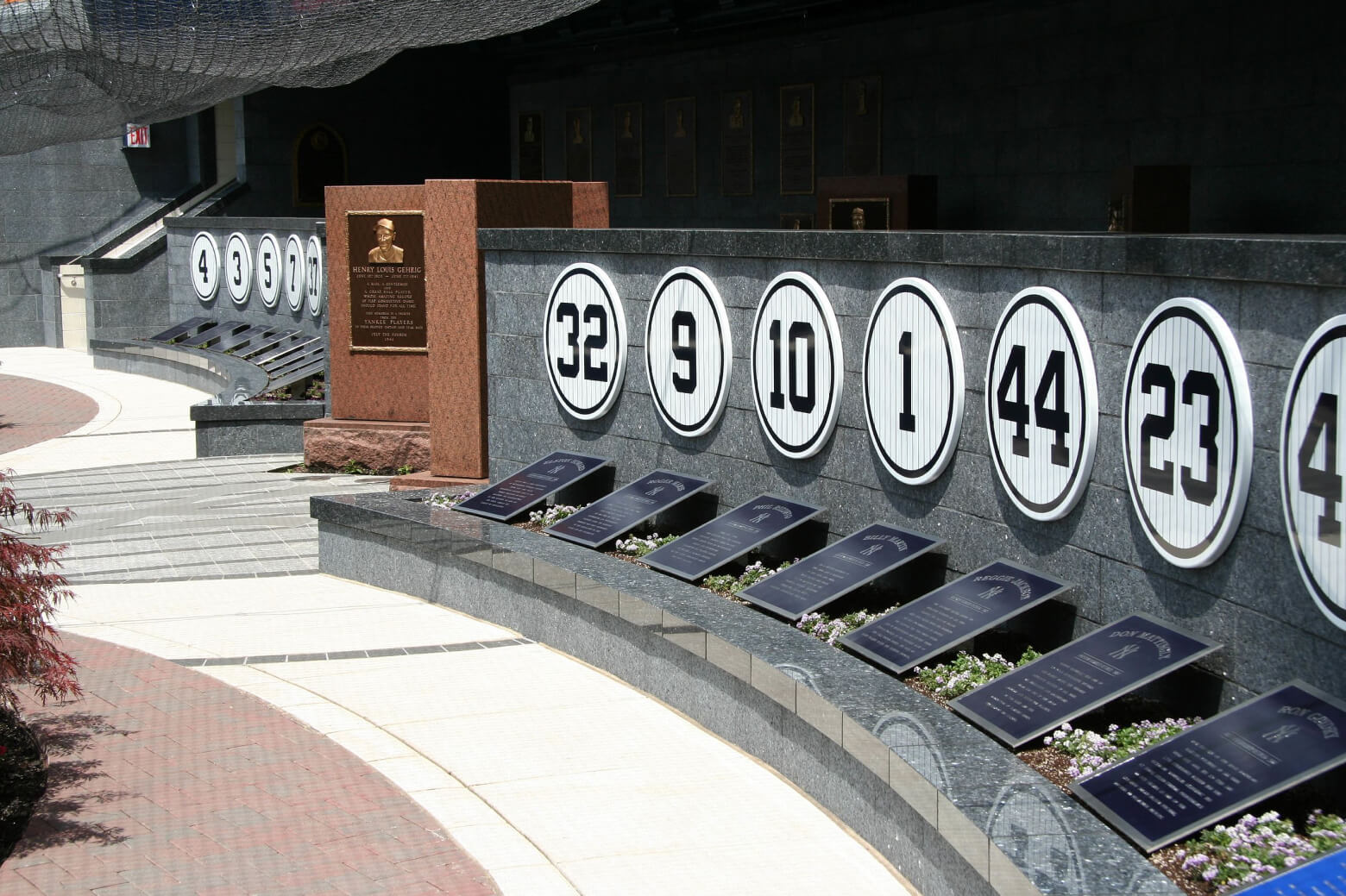
The Yankees came to us with an open brief: make a visit to Monument Park at Yankee Stadium more rewarding. The brief came with one firm condition: no additional signage. The client did not want QR codes, instructions or markings appearing in Monument Park, so the solution had to work without changing anything about the space itself.
That ruled out the standard approaches. If a visitor's phone cannot be told what it is pointed at, it has to work that out for itself.
The process
We built our own computer vision model, trained specifically for the Yankees. Rather than adapting an off-the-shelf tool, we used machine learning to teach the model to recognise the retired number plaques of the club's legends from the camera image alone.
Training a model means showing it enough examples for it to understand exactly what it is looking at. We photographed the plaques dozens of times: in bright sun and in shade, up close, at an angle and from a distance. We then used those photographs to generate thousands of further simulations, covering conditions and viewpoints we could not capture on site. From that dataset, the model learned to identify every display from any point a visitor might stand. Each training cycle improved accuracy, and recognition eventually reached 99% across all the numbers.
We worked closely with the Yankees at every stage, testing the solution in Monument Park itself and tuning the model around how visitors actually move through it.
The solution
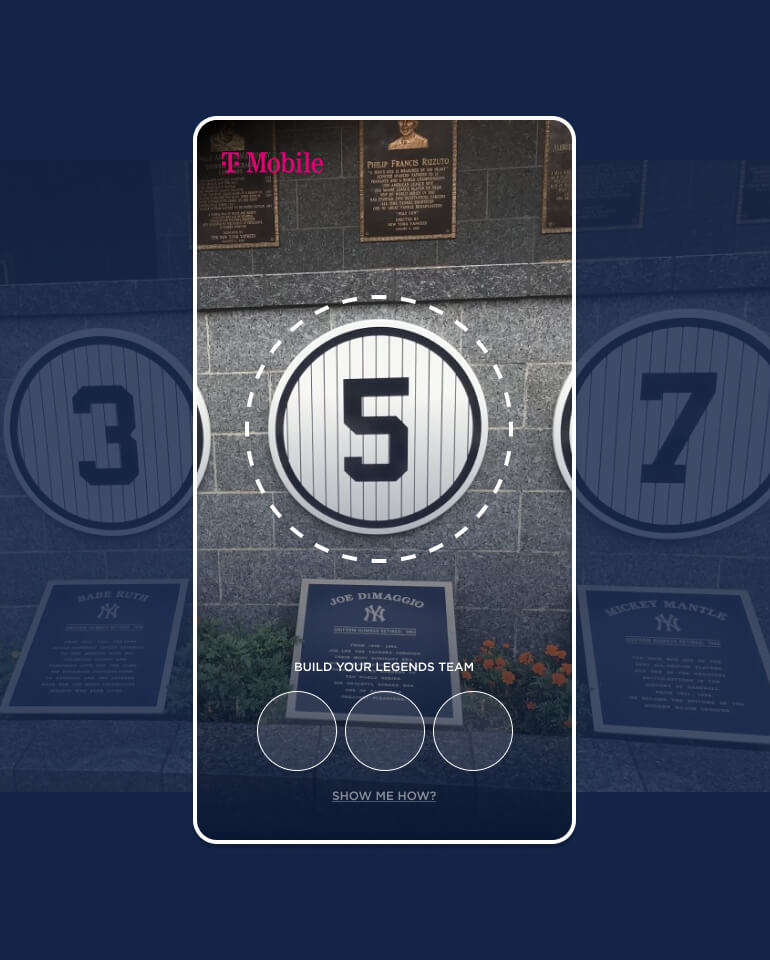
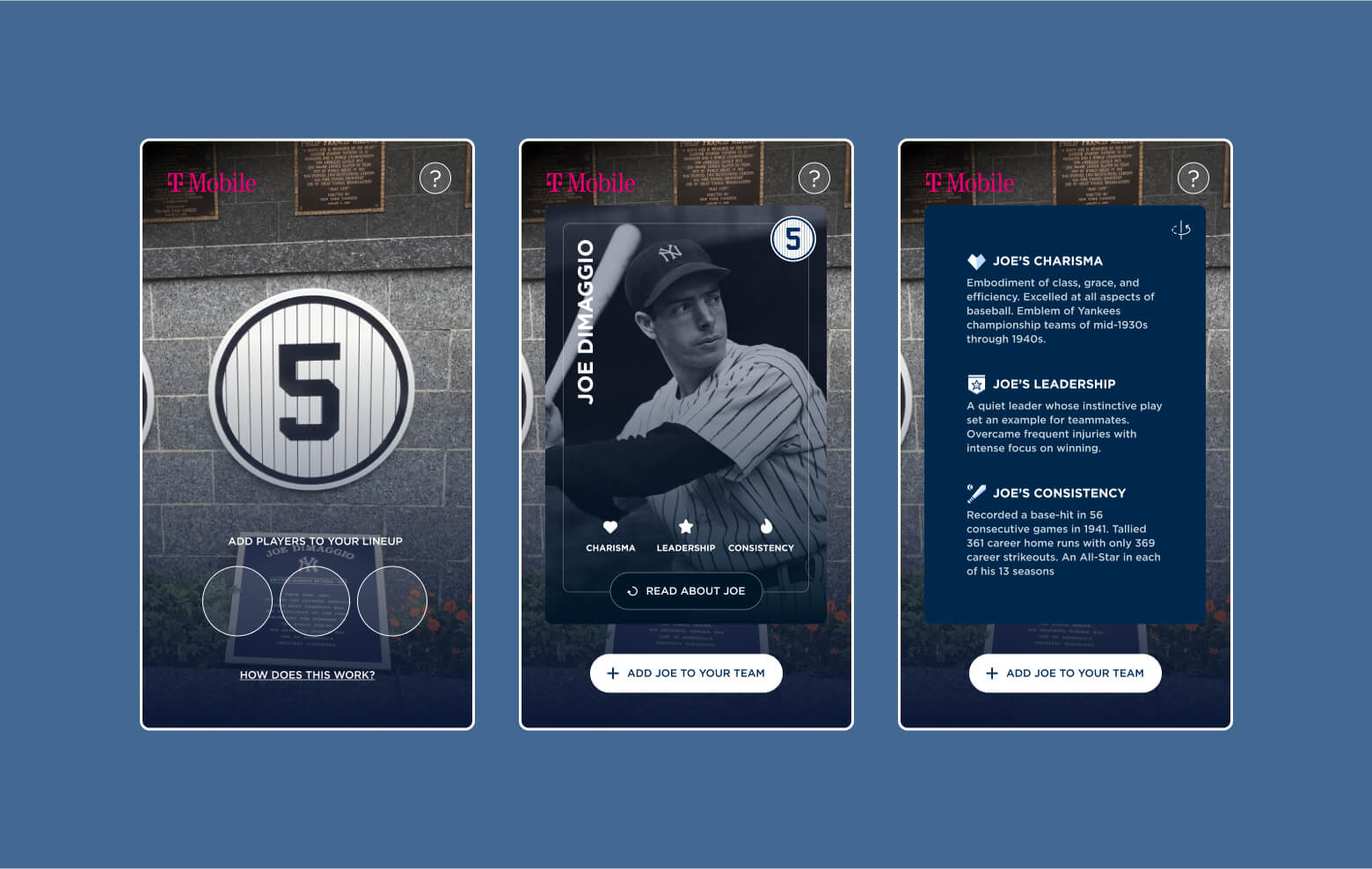
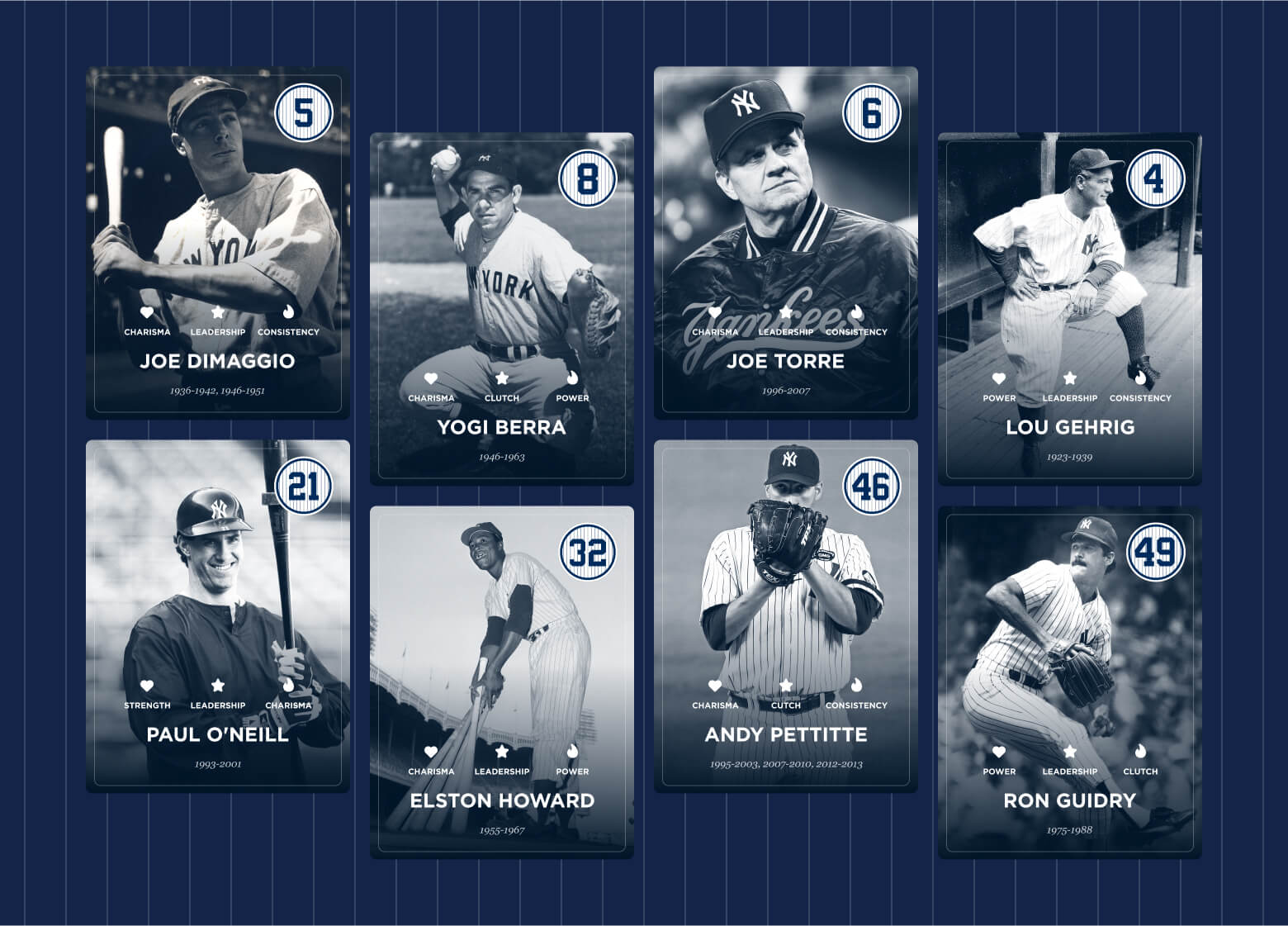
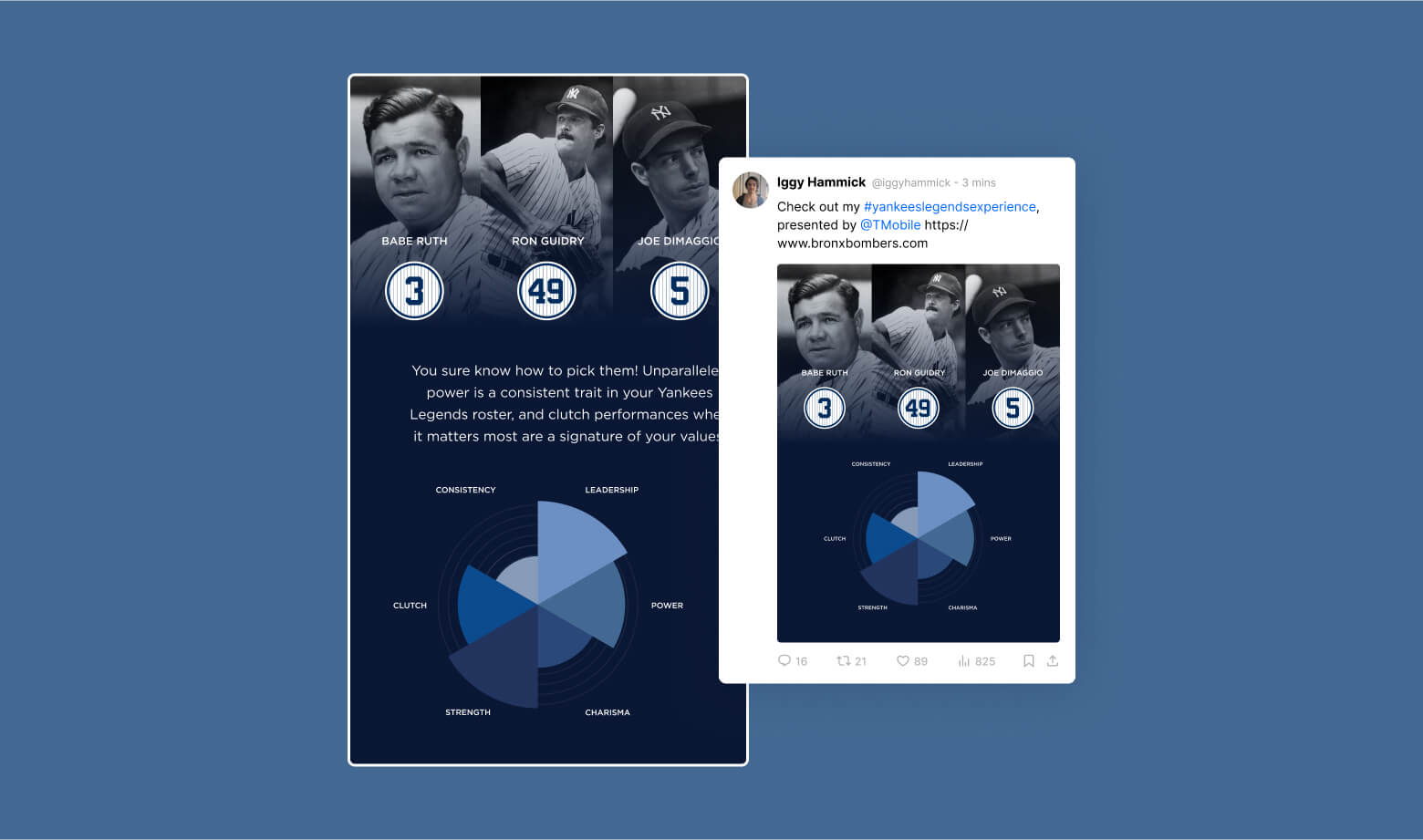
A fan lifts their phone, points it at a plaque, and the player's story appears as a digital baseball card. There is no app to download and no code to scan: it all runs in the mobile browser. From there, visitors can explore the history of each legend and build their own dream team.
The computer vision works invisibly, and that is the point. Monument Park stayed exactly as it was, and the Yankees gained a richer visit for fans without adding anything to the space.

- Services
- User Research
- UX Design
- UI Design
- Animation
- Web Development
- AI
- Computer Vision
- Machine Learning
- Augmented Reality